The demand for faster charging in electric vehicles continues to rise, bringing the performance degradation of lithium-ion batteries (LIBs) under high-rate conditions to the forefront. To uncover the mechanisms underlying such macroscopic failures, it is critical to elucidate the microscopic crystal structure evolution of electrode materials during charge and discharge. Neutron diffraction (ND), highly sensitive to light elements such as lithium and oxygen, serves as an ideal tool for operando characterization of dynamic structural changes inside batteries. However, limited temporal resolution prevents this technique from capturing the transient structural response under high-rate conditions.
To address this issue, Yinguo Xiao's Team at the School of Advanced Materials, Peking University Shenzhen Graduate School, proposed a machine learning approach termed Electrochemical to Crystallographic Parameter Inference Framework (ECPIF). This framework innovatively constructs a prediction pathway that directly maps conventional electrochemical signals to key crystallographic parameters. Without relying on time-consuming and costly ND experiments, it achieves high-precision reconstruction of the dynamic structural evolution of cathode materials under high-rate conditions. This capability effectively compensates for the limited temporal resolution of ND. It provides an efficient and practical research strategy and technical reference for mechanistic understanding and performance optimization of electrode materials in fast-charging systems.
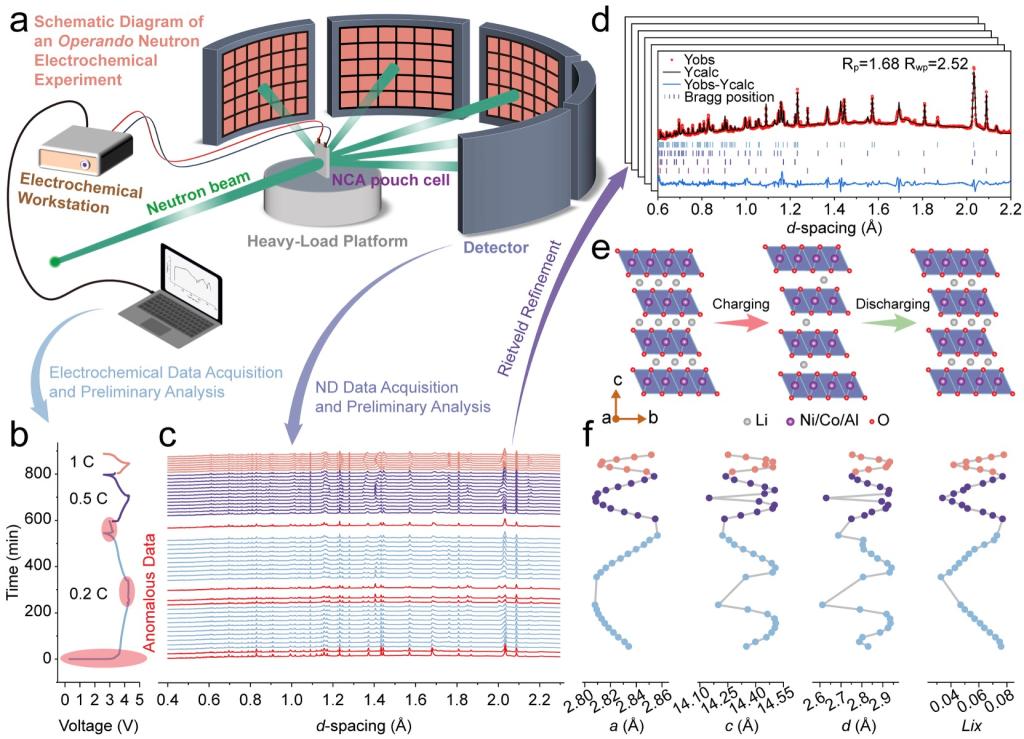
Figure 1.Operando ND experimental procedure and structural evolution analysis.
As shown inFigure 1, the team employed a LiNi0.8Co0.15Al0.05O2(NCA) || graphite pouch cell as the research subject and systematically collected operando ND data at rates of 0.2C, 0.5C, and 1C. Time alignment of the voltage-time curves from the electrochemical workstation with the ND patterns enabled a direct correlation between the electrochemical state and structural changes in the material. The refinement results of the material structure exhibited excellent agreement, yielding high-precision ground-truth lattice parameters for subsequent machine learning modeling.
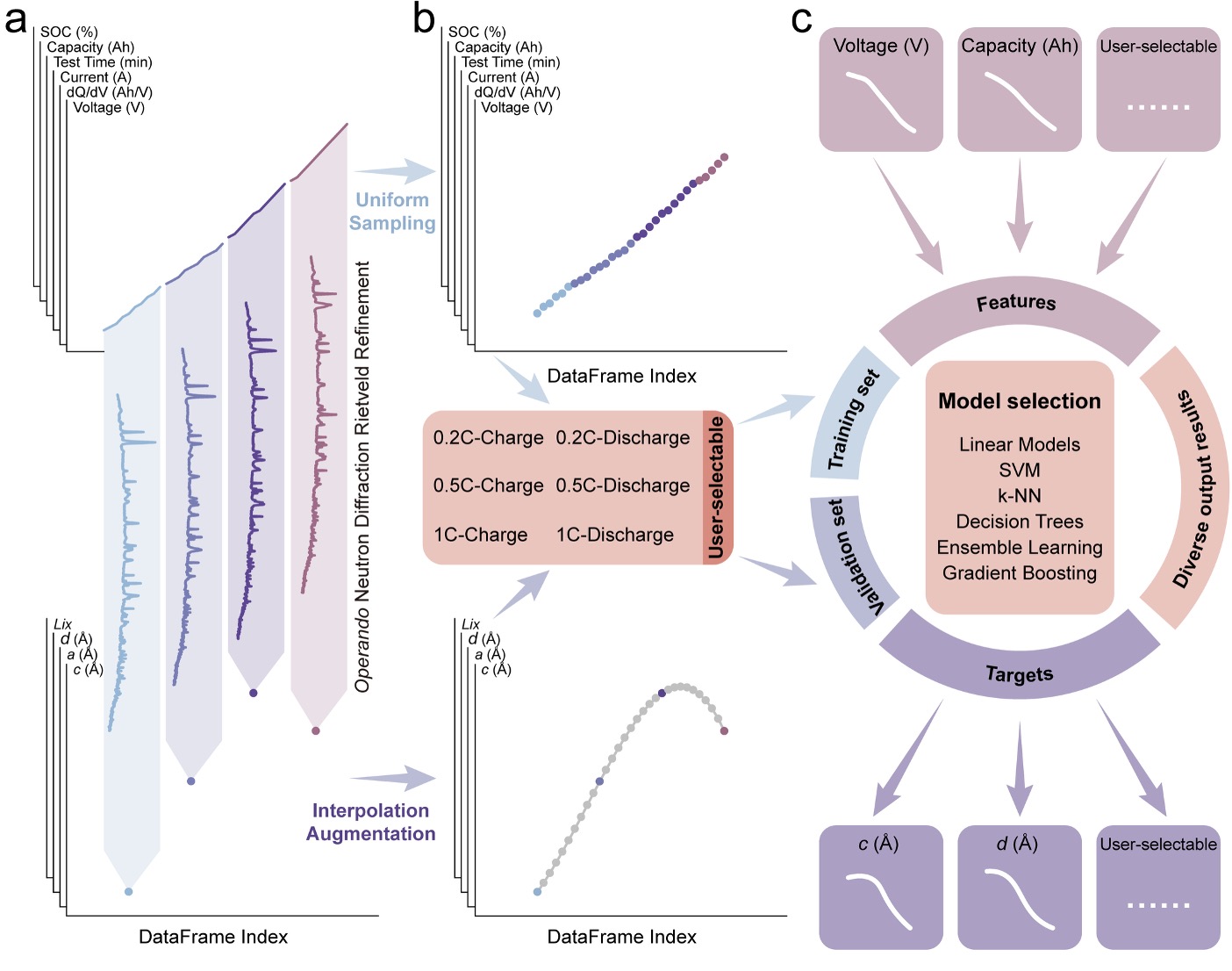
Figure 2.Design of the Electrochemical to Crystallographic Parameter Inference Framework (ECPIF).
The team constructed the ECPIF machine learning framework. By bridging the resolution gap between high-frequency electrochemical signals and low-frequency structural data, this framework established a supervised learning dataset in which each electrochemical state was precisely paired with its corresponding structure. The framework integrated 18 mainstream machine learning algorithms. Users could flexibly select features and prediction targets. The system automatically performed model training, five-fold cross-validation, and performance ranking, efficiently identifying the optimal model. Input features were determined through analysis of feature network graphs and correlation heatmaps. After the ECPIF framework identified the optimal model and conducted a thorough analysis, the team built two ensemble learning architectures for the four crystallographic parameters. Voting was adopted for lattice parametera, lattice parameterc, and the lithium interlayer distanced, while stacking was applied to the lithium occupancy in the active phase,Lix. The optimized models showed comprehensively enhanced performance. The coefficients of determination R2reached new highs, with 0.988 for lattice parametera, 0.991 for lattice parameterc, 0.937 for the lithium interlayer distanced, and 0.970 for the active-phase lithium occupancyLix. These results confirm that the framework can accurately reconstruct the continuous dynamic crystallographic evolution trajectory of electrode materials based on conventional electrochemical signals.
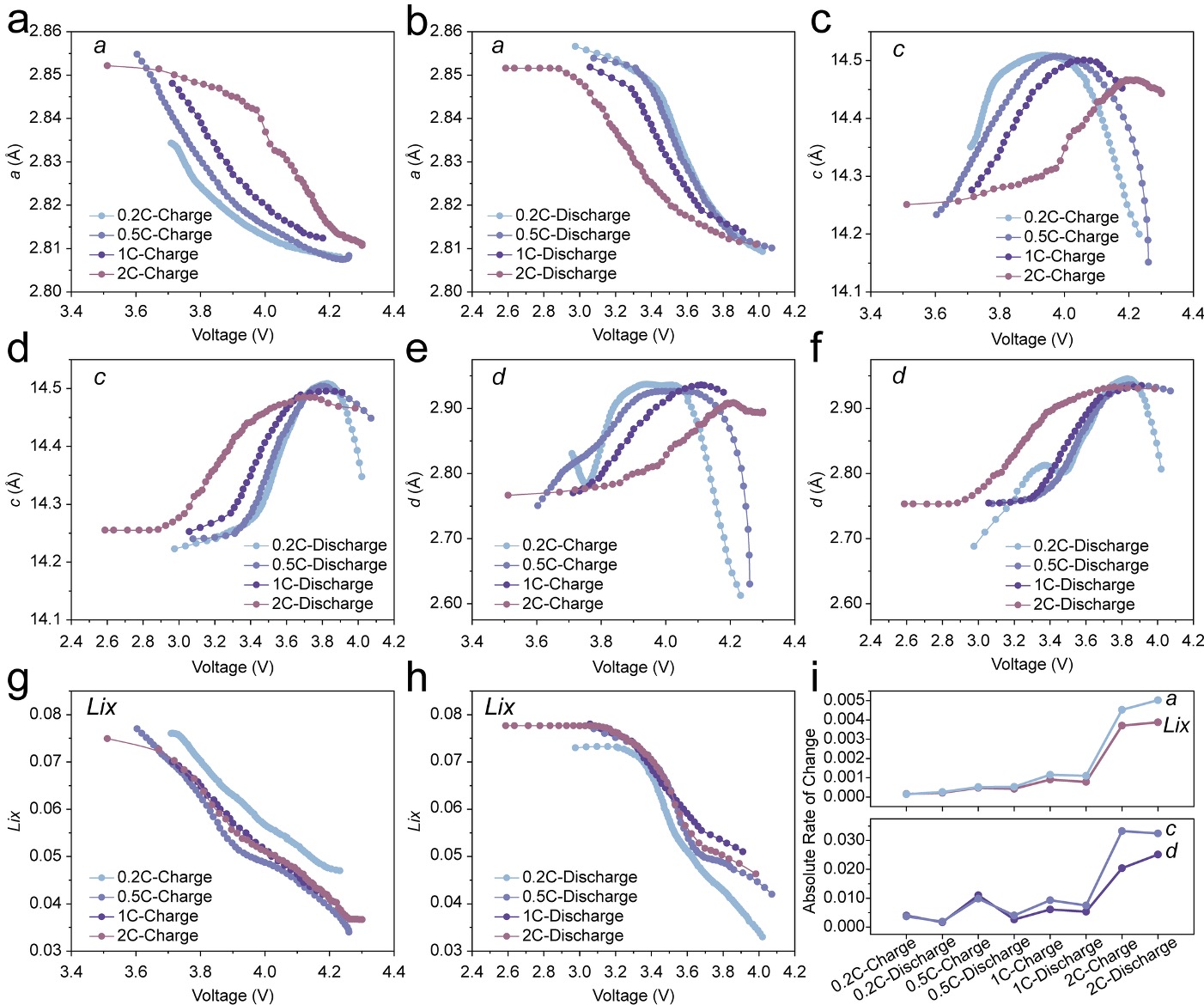
Figure 3. Predicted crystallographic parameters at a 2 C rate.
For extrapolation testing, the 2C high-rate condition was selected, a regime that remains challenging for real-time characterization by operando ND. This scenario represents the core motivation for developing the ECPIF framework. The prediction results showed that the evolution trends of lattice parametersa,c, and the lithium interlayer distancedremained consistent with the physical laws observed at lower rates. However, the overall curves changed more gradually, accurately capturing the characteristic kinetic hysteresis under high-rate conditions. The predicted lithium occupancy in the active phase,Lix, also successfully extended the evolution pattern observed after material activation. Quantitative analysis was performed by introducing the absolute rate of change (Rabs). This analysis further clarified the strong dependence of crystal structure stability on the charge/discharge rate. At low rates, the material structure exhibited a quasi-static reversible evolution. As the rate increased, kinetic limitations gradually intensified. At high rates, irreversible lattice damage was prone to occur, leading to rapid structural decay and failure. These findings provide theoretical support for elucidating the battery performance degradation mechanism under fast-charging conditions.
The related work, entitled “A Machine Learning Framework from Electrochemistry to Crystal Structure of Cathodes via Operando Neutron Diffraction”, has been published in Journal of Energy Chemistry.
Prof. Yinguo Xiao from the School of Advanced Materials, Peking University Shenzhen Graduate School, is the corresponding author of the paper. Doctoral student Mingjie Dong is the first author. The research was financially supported by the National Natural Science Foundation of China, the Guangdong Special Support Program, the open research fund of Songshan Lake Materials Laboratory, and the Large Scientific Facility Open Subject of Songshan Lake, Dongguan, Guangdong. Additional support was provided by the Guangming Science City Development and Construction Co., Ltd. and its Material Genome Big-Science Facilities Platform.
Link to the paper:https://doi.org/10.1016/j.jechem.2026.05.015