The electrochemical performance of lithium-ion batteries is fundamentally governed by electron transfer and lithium-ion intercalation/deintercalation within electrode materials. While extensive research has focused on structural changes during electrochemical cycling, the concurrent evolution of magnetic properties and electron spins—arising from redox reactions of transition metals or lattice oxygen—has often been overlooked. These magnetic and spin behaviors are intrinsically linked to the material's electronic structure, influencing the positions of valence and conduction bands, electronic conductivity, and phase transitions, ultimately determining electrochemical performance. Establishing a comprehensive understanding of the magnetic and spin evolution during delithiation and correlating it with macroscopic lattice structural changes could provide fundamental insights into electrochemical mechanisms from the perspective of electronic structure, thereby guiding the design of next-generation high-performance electrode materials.
Lithium cobalt oxide (LiCoO₂, LCO), the first cathode material commercialized for lithium batteries, remains the dominant choice for smartphones, laptops, and high-power, long-endurance drones. To meet industrial demands, LCO must achieve high energy density, high power density, and robust cycling stability at elevated cutoff voltages. Professor Feng Pan's team at Peking University Shenzhen Graduate School has systematically investigated the correlation between the electrochemical performance of LCO and its bulk and interfacial structures, leveraging their self-developed graph-theoretic structural chemistry theory and materials genomics approach (Adv. Mater., 2026, DOI: 10.1002/adma.7306;Adv. Mater., 2024, 36, 2408875;Energy Environ. Sci., 2024, 17, 7944;Adv. Funct. Mater., 2025, 35, 2504165;Natl. Sci. Rev., 2025, 12, nwaf345;Adv. Mater., 2025, 37, e04106).
Recently, in collaboration with Professor Yusheng Chen of the University of Chicago, Professor Yang Ren of City University of Hong Kong, and Professor Mingjian Zhang of The Chinese University of Hong Kong, Shenzhen (a former postdoctoral fellow and researcher in Professor Pan's group), the team conducted a comprehensive study on the structural evolution and magnetic property changes in LCO during electrochemical delithiation. By combiningin-situsynchrotron X-ray diffraction with detailed magnetic characterization, they constructed a magnetic phase diagram of LCO as a function of lithium content and correlated it with the structural phase evolution (Figure 1). The results reveal a series of complex magnetic transitions during lithium removal: paramagnetic → antiferromagnetic → paramagnetic → diamagnetic → paramagnetic. Notably, the effective magnetic moment of Co⁴⁺ was found to be strongly correlated with the local structural changes of the CoO₆ octahedra. These findings deepen the understanding of the coupled structural–magnetic behavior during electrochemical processes from the perspectives of spin states and superexchange interactions. The work was published in the leading energy journalAngewandte Chemie International Editionunder the title "Correlating Structure Change with Magnetic Ordering and Spin Fluctuation during Delithiation of Transition Metal Layered Oxide" (DOI: 10.1002/anie.202521015, Impact Factor: 16.6).
Structural Phase Transitions in LCO at 4.6 V
The team investigated the structural phase transitions of LCO during charge/discharge up to 4.6 V and identified a series of phase changes at high cutoff voltages.
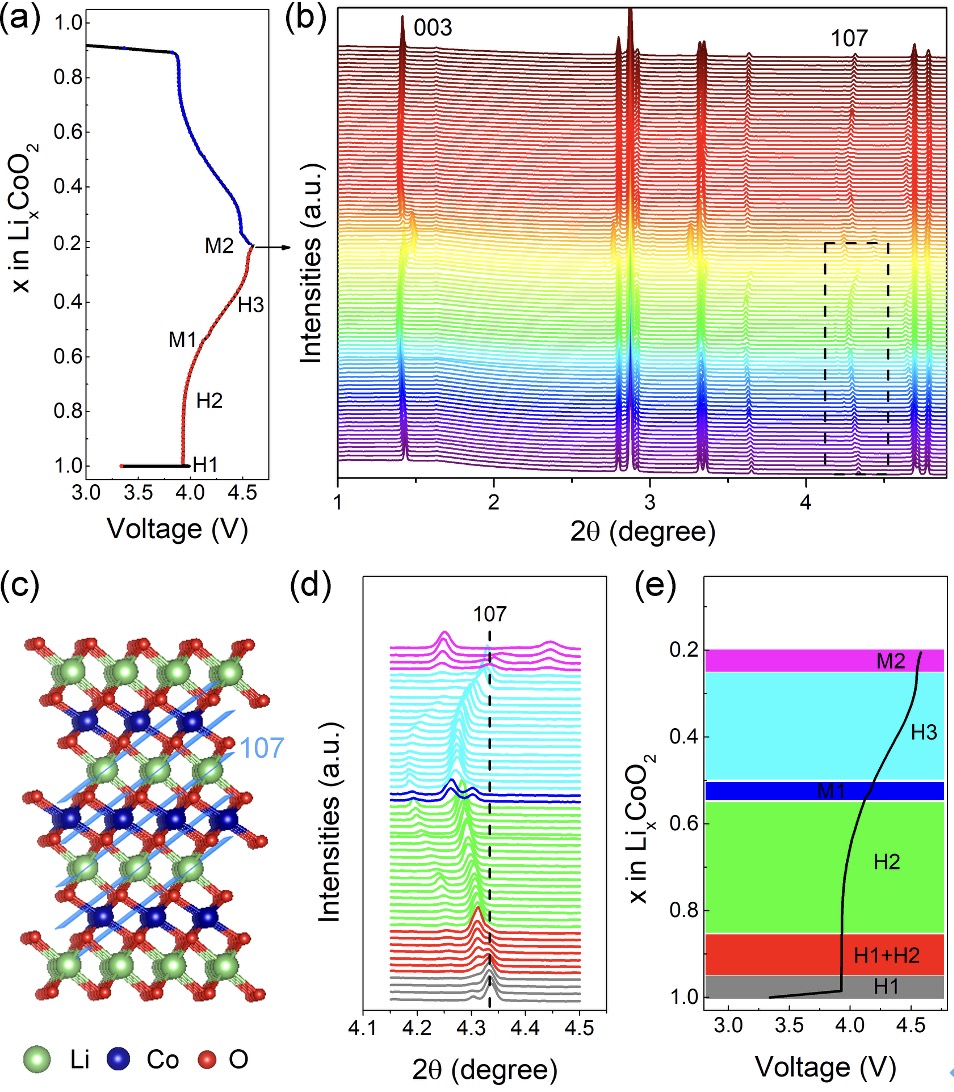
Figure 1. Structural phase transitions of LiCoO₂ at a cutoff voltage of 4.6 V.
As shown in Figure 1, the diffraction peaks can be divided into two groups based on their shifting trends: Group I (003, 104, 015, 107, and 018) initially shifts to higher angles and then to lower angles, while Group II (101 and 110) exhibits the opposite behavior. Group I peaks primarily reflect changes in the*c*-axis layer spacing, whereas Group II peaks are related toab-plane lattice parameters. For the first time, the 107 peak at high angles is proposed as a characteristic feature to distinguish phase transitions. The delithiation process involves four phase transitions: H1 → H2 → M1 → H3 → M2, dividing the process into six regions: (I) pure H1 phase; (II) coexistence of H1 and H2; (III) pure H2 phase; (IV) pure M1 phase; (V) pure H3 phase; and (VI) M2 phase. The corresponding lithium compositions for these phases are H1 (*x*= 1–0.85), H2 (*x*= 0.95–0.55), M1 (*x*= 0.55–0.50), H3 (*x*= 0.50–0.25), and M2 (*x*< 0.25).
Magnetic Behavior of Delithiated LCO
The team examined the magnetic properties of LCO at various delithiated states (*x*= 0.97, 0.75, 0.65, 0.56, 0.53, 0.5, 0.44, 0.39, 0.33, and 0.2). TheM–Tcurves (Figure 2) reveal three distinct temperature-dependent magnetic behaviors: MB1 (paramagnetic), observed for*x*= 0.97 and 0.75; MB2 (paramagnetic → antiferromagnetic → paramagnetic), spanning 0.65 ≥*x*≥ 0.44; and MB3 (diamagnetic → paramagnetic), for*x*≤ 0.39. In the MB2 samples, the antiferromagnetic transition intensity increases with greater lithium extraction. These magnetic behaviors can be correlated with the phase structure: MB1 corresponds primarily to the H1 and H2 phases; MB2 is associated with the H2, M1, and H3 phases; and MB3 relates to the H3 and M2 phases. The team further established that the magnetism in LCO originates from the electronic configurations of Co³⁺ and Co⁴⁺.
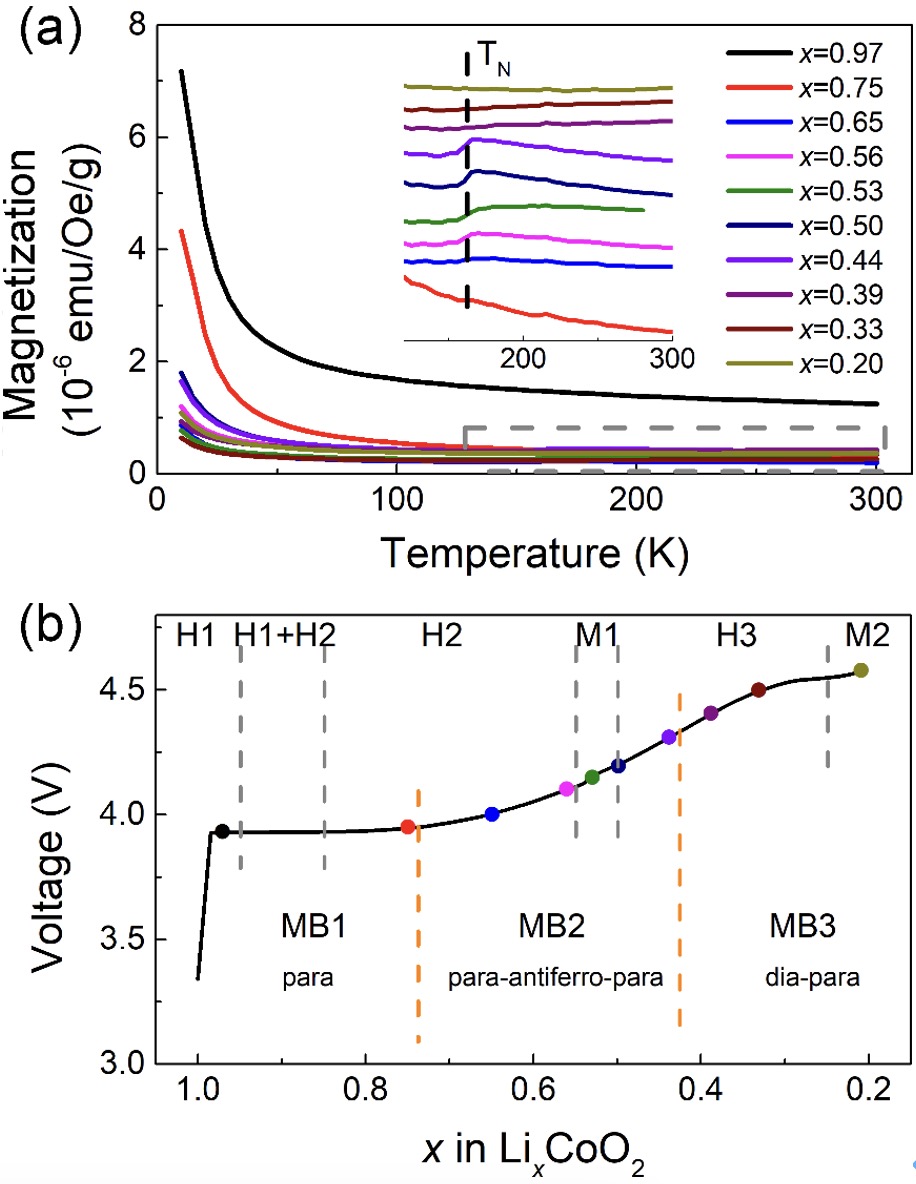
Figure 2. Magnetic behavior study of delithiated LiCoO₂.
Spin States and Crystal Field Effects
As illustrated in Figure 3a, Co³⁺ (3d⁶) possesses no unpaired electrons and resides in a low-spin state. In contrast, the spin state of Co⁴⁺ (3d⁵) depends on the crystal field strength of the CoO₆ octahedron: a strong field yields a low-spin state, while a weak field results in a high-spin state, with theoretical effective magnetic moments of 1.73 and 5.92 μB, respectively. For the*x*= 0.97 sample, the effective magnetic moment was measured at 4.16 μB (Figure 3b), closely matching the theoretical value for the high-spin state, indicating a predominance of high-spin Co⁴⁺. As lithium content decreases, the effective magnetic moment drops below 1.73 μB, signaling a transition from high-spin to low-spin. Concurrently, changes in the Co–O bond length within the CoO₆ octahedra (Figure 3c) show a trend similar to that of the magnetic moment with varying lithium content.
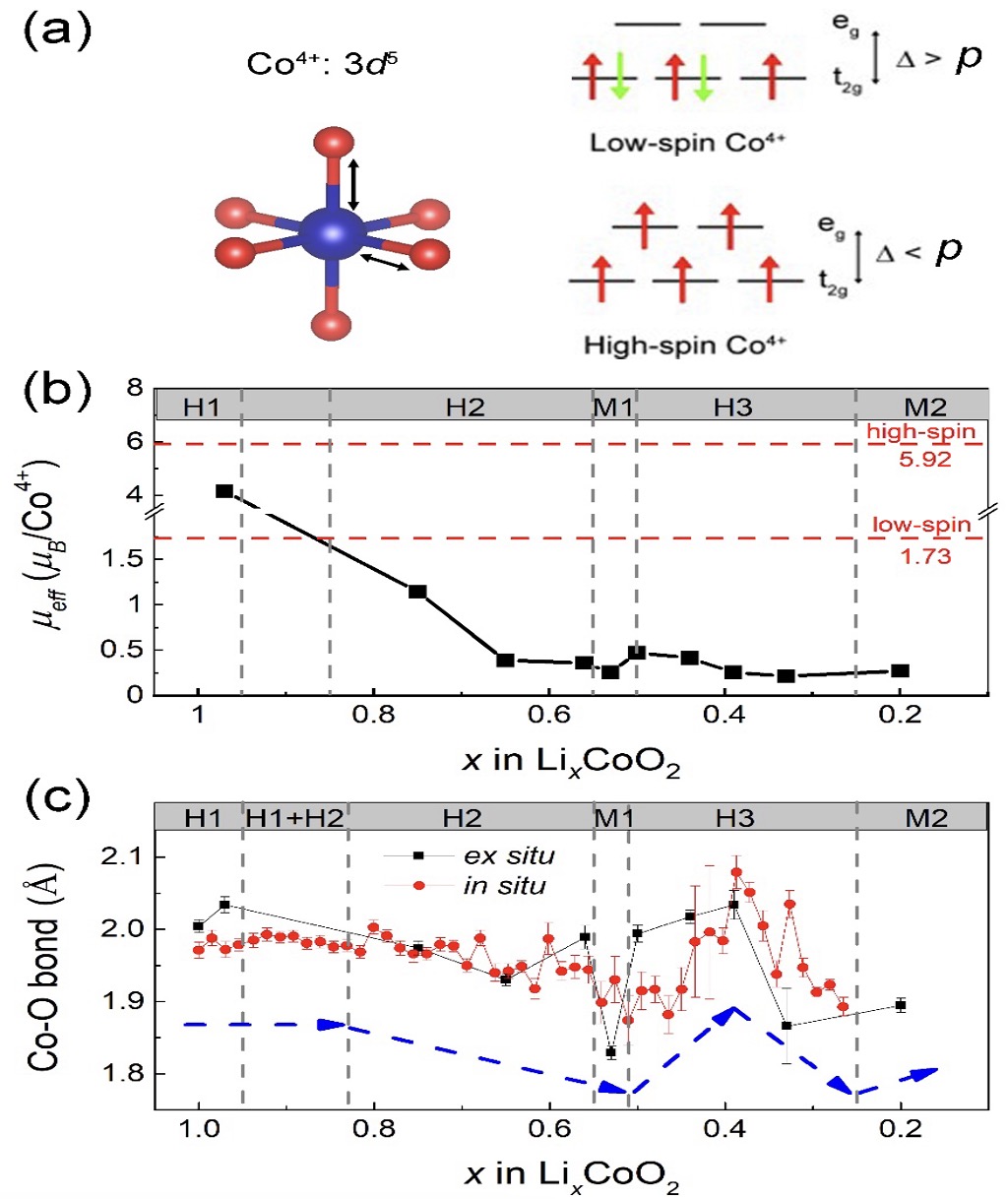
Figure 3. Magnetic behavior study of delithiated LiCoO₂.
Spin Crossover Mechanism and Structural Driving Force
Using crystal field theory, the team rationalized the spin crossover and its relationship to structural changes (Figure 4a). In pristine LCO, Co³⁺ is thermodynamically stable in a low-spin state within a strong crystal field. During early delithiation (*x*= 1–0.84), a small fraction of Co³⁺ is oxidized to Co⁴⁺ without immediate structural modification, weakening the effective crystal field around the Co⁴⁺-bearing octahedra and stabilizing the high-spin state. Upon further delithiation, the octahedra contract, strengthening the crystal field and driving the spin transition from high-spin to low-spin. Density functional theory (DFT) calculations (Figure 4b–c) demonstrate that the low-spin configuration is energetically lower than the high-spin state, suggesting that the high-spin state is thermodynamically metastable. This energetic preference may serve as the driving force for both CoO₆ octahedral contraction and the observed structural phase transitions.
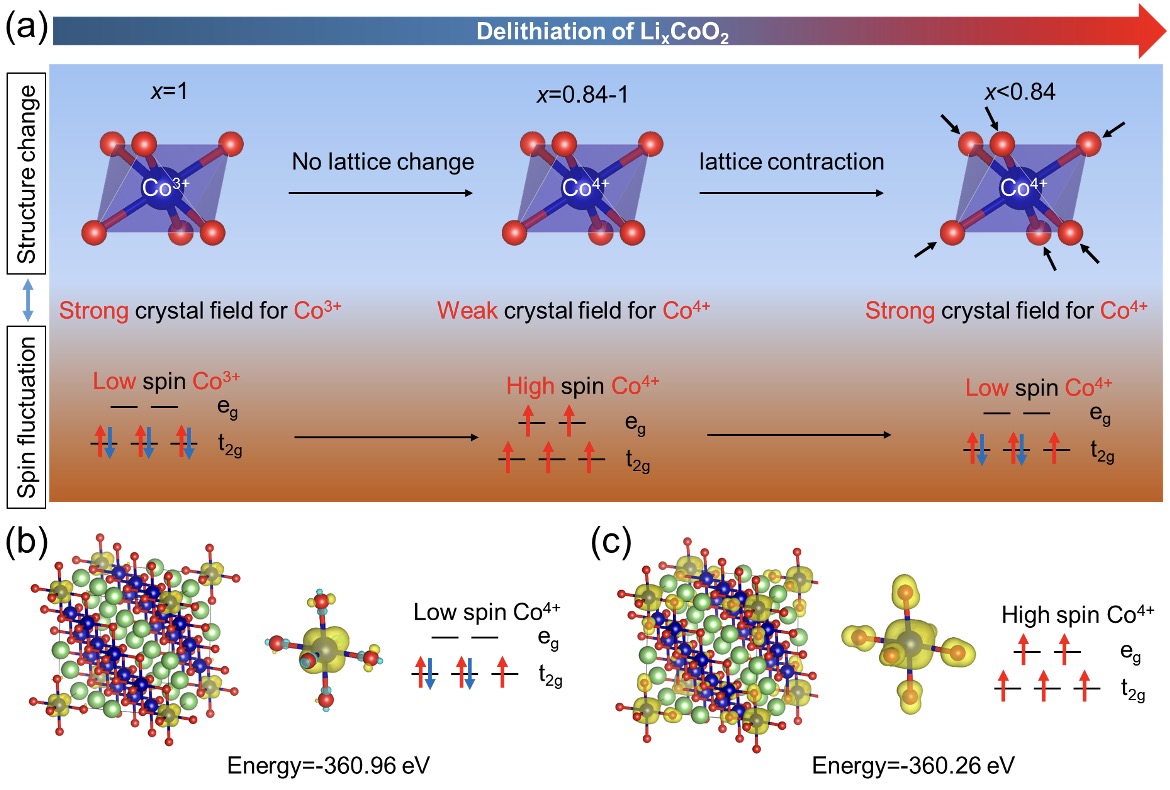
Figure 4. Magnetic behavior study of delithiated LiCoO₂.
Integrated Phase and Magnetic Ordering Diagram
Through combinedin-situsynchrotron XRD, magnetic analysis, and theoretical calculations, the research team has, for the first time, systematically elucidated the magnetic evolution and spin crossover behavior in LCO during delithiation. By correlating these findings with macroscopic phase transitions and microscopic octahedral distortions, they established a comprehensive correspondence map between the magnetic phase diagram and the structural phase diagram (Figure 5).
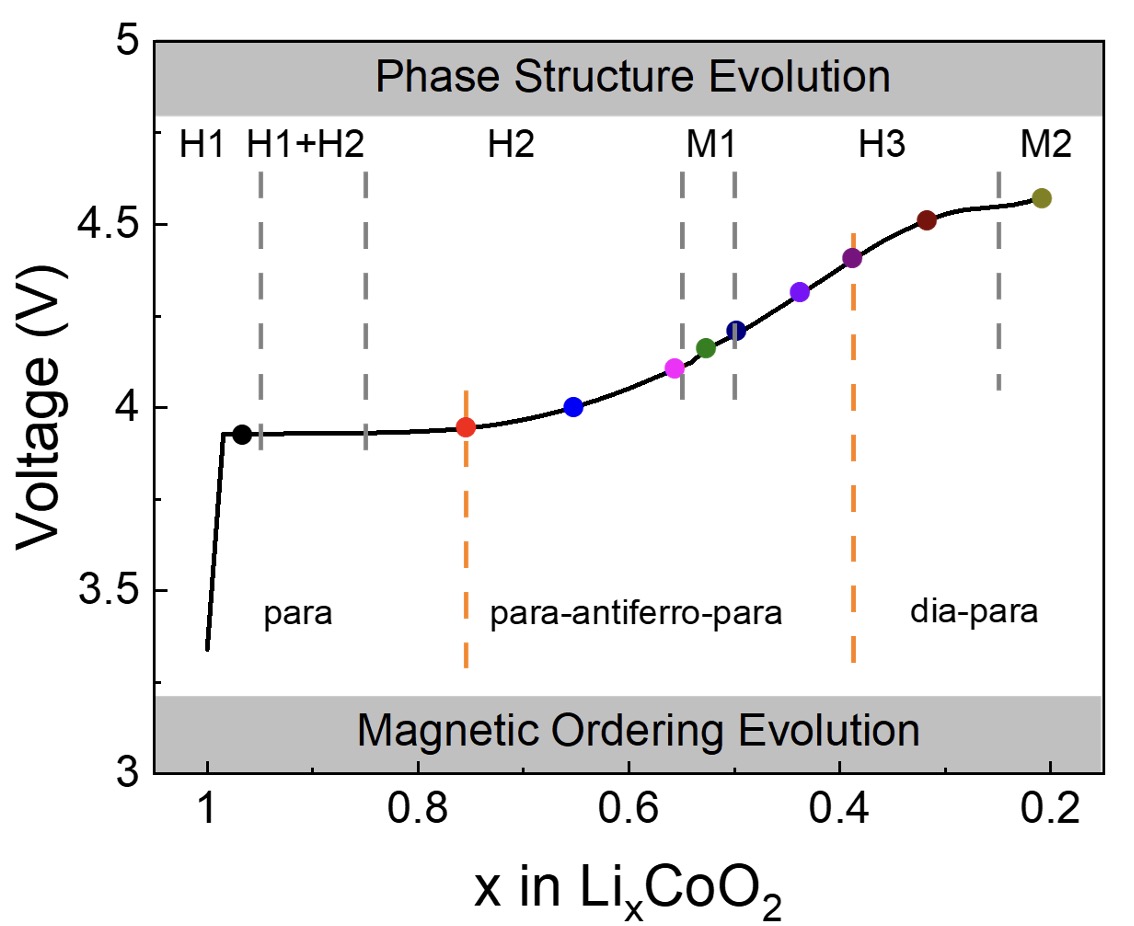
Figure 5. Correlation between structural evolution and magnetic ordering during delithiation of LiCoO₂.
This work was conducted under the joint supervision of Professor Feng Pan (Peking University), Professor Yusheng Chen (University of Chicago), and Professor Yang Ren (City University of Hong Kong). The co-first authors are Professor Mingjian Zhang (The Chinese University of Hong Kong, Shenzhen) and Dr. Zhefeng Chen (a recent Ph.D. graduate from Peking University Shenzhen Graduate School). The research was supported by the National Natural Science Foundation of China, the Guangdong Innovation Team Program, and the Shenzhen Natural Science Foundation.