Electrolytes are central to advanced batteries, governing ion transport, electrode–electrolyte interfacial stability, and cycle life. Yet the vast chemical space of electrolyte formulations—combined with complex solvation structures, ion coordination behavior, and dynamic interfacial reactions—makes precise design exceptionally challenging. In lithium metal batteries, electrolyte decomposition and solid electrolyte interphase (SEI) formation involve multi-scale structural evolution and intricate reaction mechanisms. Linking molecular structure and interfacial behavior to battery performance, and enabling intelligent design toward target properties, remains a grand challenge. Beyond physicochemical complexity, data-driven models face equally severe hurdles.
Electrolyte formulation spaces are inherently high-dimensional, strongly nonlinear, and highly coupled, with macroscopic properties emerging from intricate non-local intermolecular interactions. While many machine learning frameworks have achieved excellent performance in forward prediction and inverse design, model reusability and transferability across chemical systems are now regarded—alongside prediction accuracy—as decisive indicators for practical industrial application. This is particularly critical for electrolytes, where vast differences in experimental conditions and data sources make model performance highly dependent on the scale, composition, and distribution of training data.
A Long-Term Effort in AI-Driven Electrolyte Design
Prof. Jiaxin Zheng's group at Peking University's School of Advanced Materials and School of AI for Science has long pursued AI-driven cross-scale simulation and design. The group developed a charge-informed machine learning potential (QMTP) method and applied it to lithium metal/electrolyte interfacial reaction simulations, achieving accurate characterization of interfacial charge transfer and reaction kinetics (npj Computational Materials, 2025, 11, 121). They further proposed a hybrid AIMD/ML-potential (HAML) approach, enabling long-timescale stable simulations of electrolyte interfacial systems while maintaining first-principles accuracy (npj Computational Materials, 2025, 11, 245). Using the QMTP method and cross-scale coupling strategy, the group collaborated with experimental teams to reveal the regulatory mechanism of dynamic interfacial excess charge variation (Nat. Commun., 2026, 17, 5916), providing new theoretical tools for understanding and regulating electrolyte interfacial reactions.
Evaluating and Extending a Foundation Model for Electrolyte Design
Building on this foundation, Prof. Zheng's group collaborated with Prof. Chuying Ouyang (Guest Professor at Peking University and Co-President of R&D at CATL) and Dr. Yunxing Zuo (CTO of Shenzhen Yigen Technology). Together, they established a systematic multi-source validation and multi-scale extension framework targeting the frontier challenges of robustness, transferability, and multi-scale applicability faced by Bamboo-Mixer (Nat. Mach. Intell.2026, 8, 186–196), a foundation model for electrolyte design developed by ByteDance Seed.
The work successfully reproduced and evaluated the boundaries of this model in electrolyte property prediction and inverse design, uncovered a "few-shot dilemma" in data distribution and few-shot generalization, and—for the first time—extended the framework from molecular physicochemical properties to device-level Coulombic efficiency (CE) and electron energy boundary (EEB) prediction. The resulting multi-objective inverse design significantly outperforms existing benchmarks.
The research was published inNature Machine Intelligenceas "Reusability report: exploring the utility and extensibility of an integrated modeling framework for liquid electrolyte design."
Fig. 1. The article published in Nat. Mach. Intell
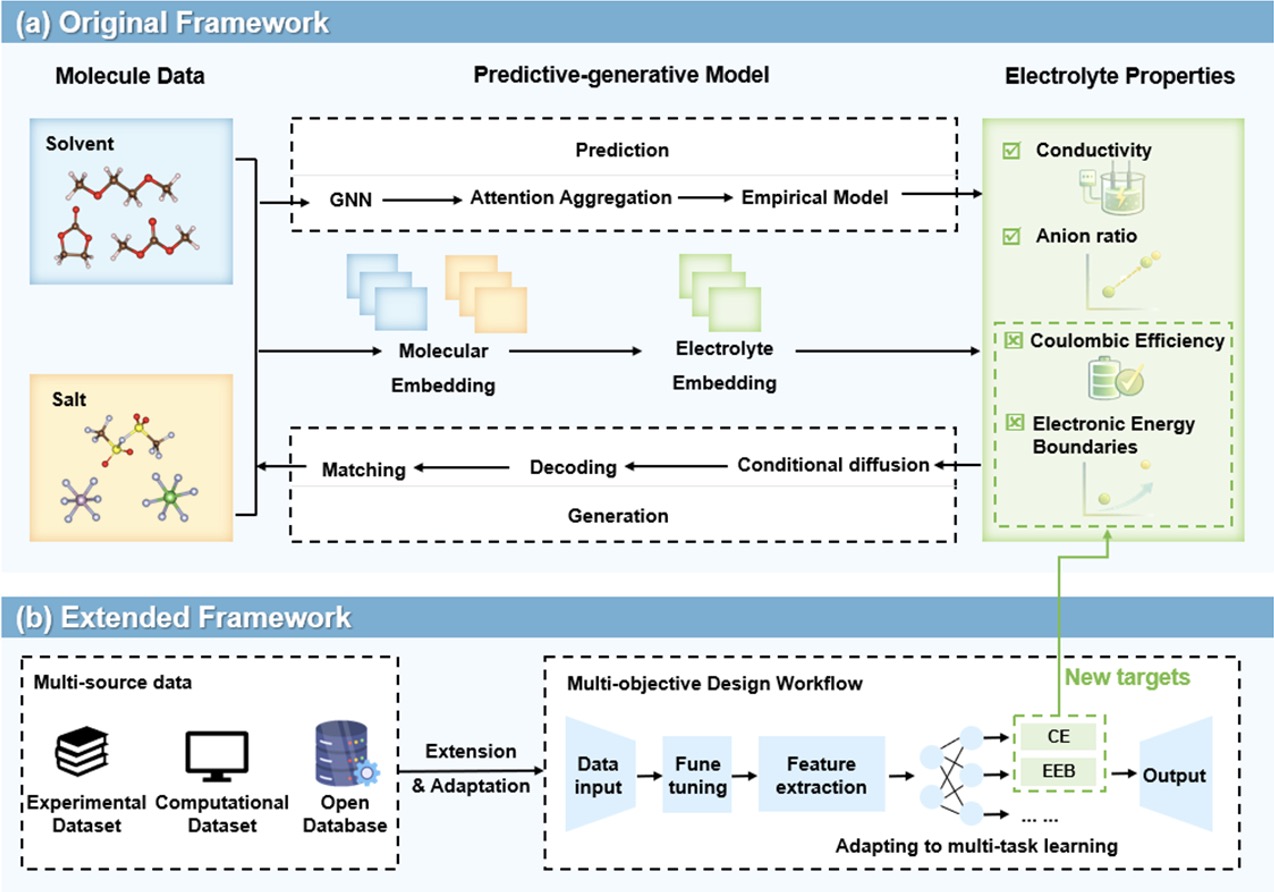
Fig 2. Schematic of the evaluation and extensibility framework.
Key Findings
High-precision benchmark reproduction and physical consistency. Using public experimental data and high-throughput computational datasets, the team reproduced and fine-tuned the Bamboo-Mixer model. The model achieved extremely high accuracy across molecular and formulation properties while perfectly matching empirical physical laws governing electrolyte performance evolution with temperature and concentration. Fine-tuning further improved generation accuracy in target-driven inverse generation tasks, with higher success rates under specific formulation constraints.
Quantifying data dependence. The study quantified dynamic dependency chains among physicochemical properties. For example, missing density and viscosity data severely impaired conductivity prediction by disrupting embedded empirical physical laws. The model also exhibited extremely high sensitivity to data volume during fine-tuning—reduced fine-tuning data led to sharp declines in prediction accuracy—offering key guidance for high-throughput data collection strategies.
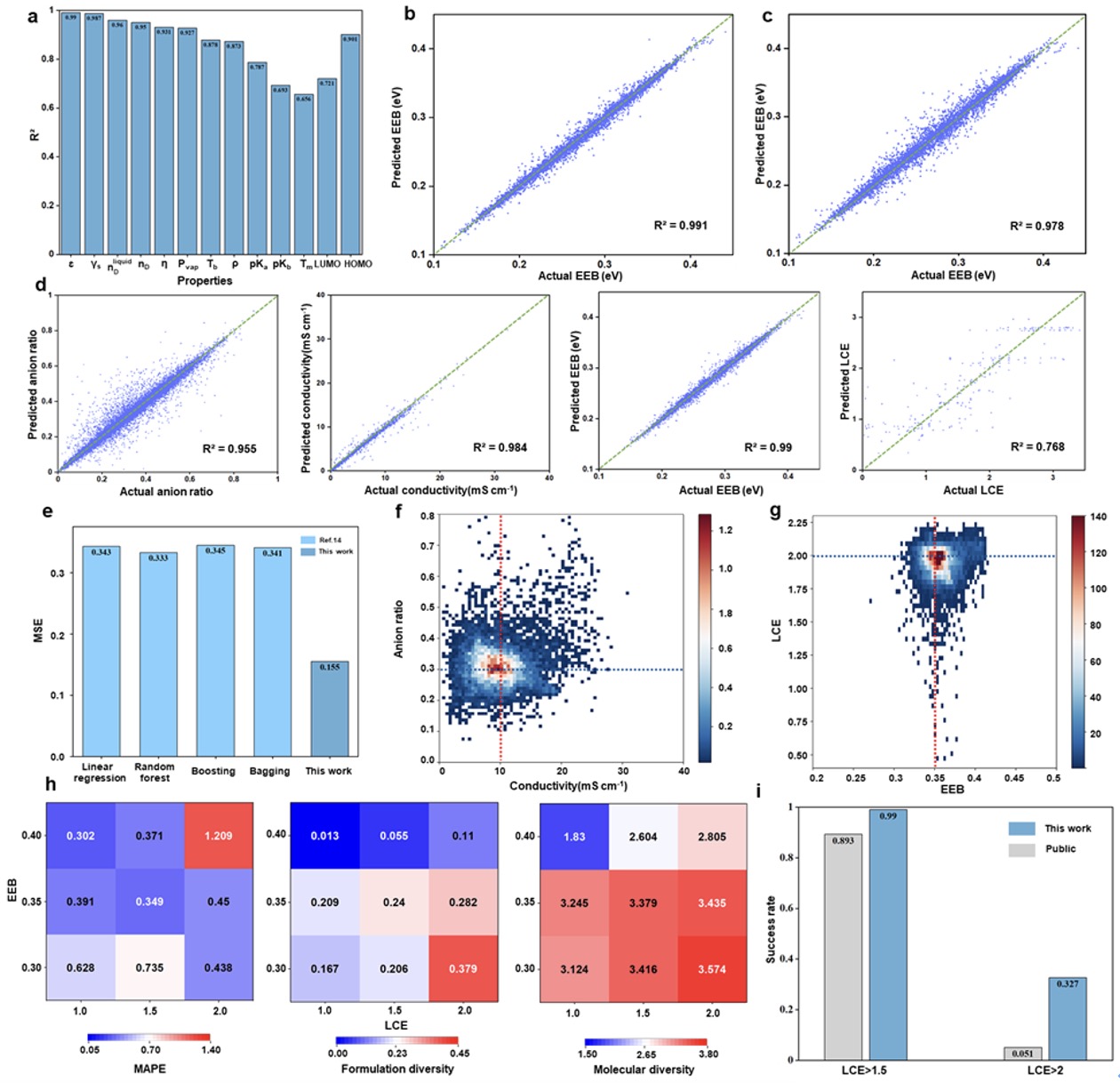
Fig 3. Multi-scale extension from molecular descriptors to electrochemical and battery performance metrics.
Decoding few-shot generalization. In zero-shot and few-shot transfer tests across temperature, concentration, and elemental heterogeneity, the team discovered a "few-shot dilemma": the model generalizes well under zero-shot conditions, but blindly adding a very small number of unseen samples for fine-tuning disrupts its prior distribution and causes severe performance fluctuations. For novel electrolyte systems, however, the model demonstrated strong rapid domain adaptation.
Cross-scale multi-objective synergy. By extending the framework cross-scale, the team achieved multi-scale, multi-objective integration. At the molecular level, HOMO and LUMO predictions were introduced, enabling simultaneous inference across 13 tasks. At the formulation level, the team introduced an electron energy boundary (EEB) descriptor reflecting the electrochemical stability window, achieving prediction accuracy R² up to 0.99. At the device level, battery Coulombic efficiency (CE) was incorporated into prediction and inverse generation tasks. The extended model achieved a mean squared error (MSE) of only 0.155 for LCE prediction, far surpassing previously reported benchmarks. Through integrated decoupling and joint inverse design of four performance objectives, the success rate for inverse generation of next-generation high-CE electrolytes improved by 26.7% over the original public model.
Outlook
This work provides an important foundation for the reliable application and broad adoption of AI-driven electrolyte design. The research team will continue advancing AI-driven automated electrolyte design, developing more intelligent and industrially deployable fully automated pipelines to support the efficient development of next-generation high-energy-density energy storage devices.
Authors and Acknowledgments
Postdoctoral researcher Genming Lai and Master's student Juntao Zhao are co-first authors. Prof. Chuying Ouyang, Prof. Jiaxin Zheng, and Dr. Yunxing Zuo are co-corresponding authors. Zekai Liu, Ruiqi Zhang, Hanming Li, Qiliang Zhang, and Fangchao Rong contributed to data support and result analysis. The authors thank Dr. Zhenze Yang, Dr. Sheng Gong, and Dr. Wen Yan from ByteDance Seed for discussions. This research was supported by the National Science and Technology Major Project for Advanced Materials (2025ZD0618801), the National Natural Science Foundation of China Key Program (12426301), and the AI4S Interdisciplinary Special Program of Peking University Shenzhen Graduate School.
Link to the Paper: https://www.nature.com/articles/s42256-026-01277-x