On the afternoon of November 3, 2025, the 124th session of the Nanyan Lecture Hall was held in Room 125, Building C, at Peking University Shenzhen Graduate School. Professor Christian Serre, Member of the French Academy of Sciences and Research Director of the French National Centre for Scientific Research (CNRS), was invited to deliver an academic lecture titled “Functional Metal-Organic Framework-Based Materials for Various Applications.” The lecture was chaired by Dr. Mingchao Wang, Assistant Professor at the SAM.
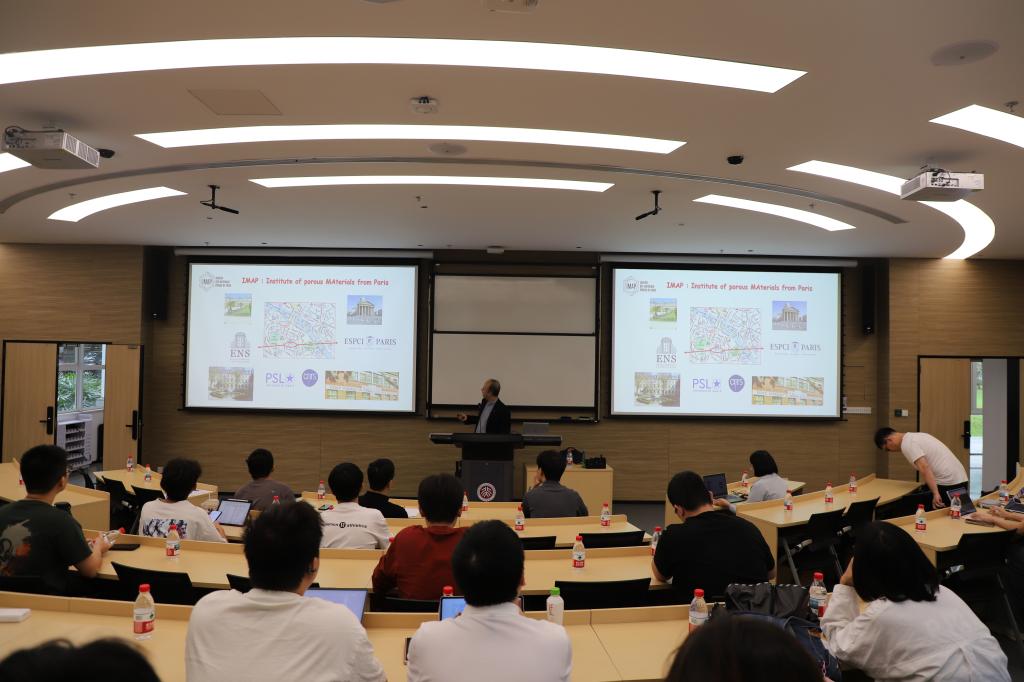
Figure 1. The 124th Nanyan Lecture Hall in session
On October 8, 2025, the Nobel Prize in Chemistry was announced, honoring three scientists whose research centers on metal–organic frameworks (MOFs), highlighting the immense prospects of crystalline framework materials. MOFs are crystalline porous materials self-assembled from metal ions or clusters and organic ligands through coordination bonds. They feature exceptionally high specific surface areas and tunable pore structures, earning them the nickname “molecular sponges.” By tailoring the metal centers and organic linkers, researchers can precisely design material functionalities, enabling a wide range of potential applications.

Figure 2. Prof. Serre delivering his lecture on MOF materials
In his lecture, Prof. Serre provided a systematic overview of MOFs from four perspectives, with a particular focus on their applications across different fields. He first highlighted the role of MOFs in improving indoor air quality. MOF materials can efficiently adsorb harmful substances such as formaldehyde and volatile organic compounds (VOCs), with adsorption capacities far exceeding those of traditional materials. Certain MOFs can even catalytically decompose nitrogen oxides at room temperature or under light exposure, enabling continuous air purification.
In the field of catalysis, MOFs function as highly effective heterogeneous catalysts. Their active sites—located either at the metal nodes or at organic functional groups introduced through post-synthetic modification—are uniformly distributed across their large surface areas. Reactant molecules diffuse, concentrate, and become activated efficiently within the ordered nanopores, enabling selective conversion into desired products. After the reaction, the solid MOF catalysts can be easily separated and reused, offering both high efficiency and operational convenience.
For energy conversion, MOF-derived materials can serve as high-performance electrode materials for ion storage. MOFs can also be designed as solid-state electrolytes or separator-coating layers, providing fast ion transport and enhanced safety. In fuel cells, MOFs can be used to construct efficient electrocatalysts, improving the oxygen reduction reaction at the cathode and supporting the development of clean-energy technologies.
Finally, Prof. Serre introduced precise synthesis strategies for nano-scale MOF materials. By optimizing the self-assembly of metal ions and organic ligands—such as through microwave-assisted synthesis or the use of specific surfactants—researchers can accurately control nucleation and crystal growth. These methods enable the preparation of MOF nanocrystals and nanofilms with uniform sizes and well-defined morphologies, laying the foundation for their advanced applications.
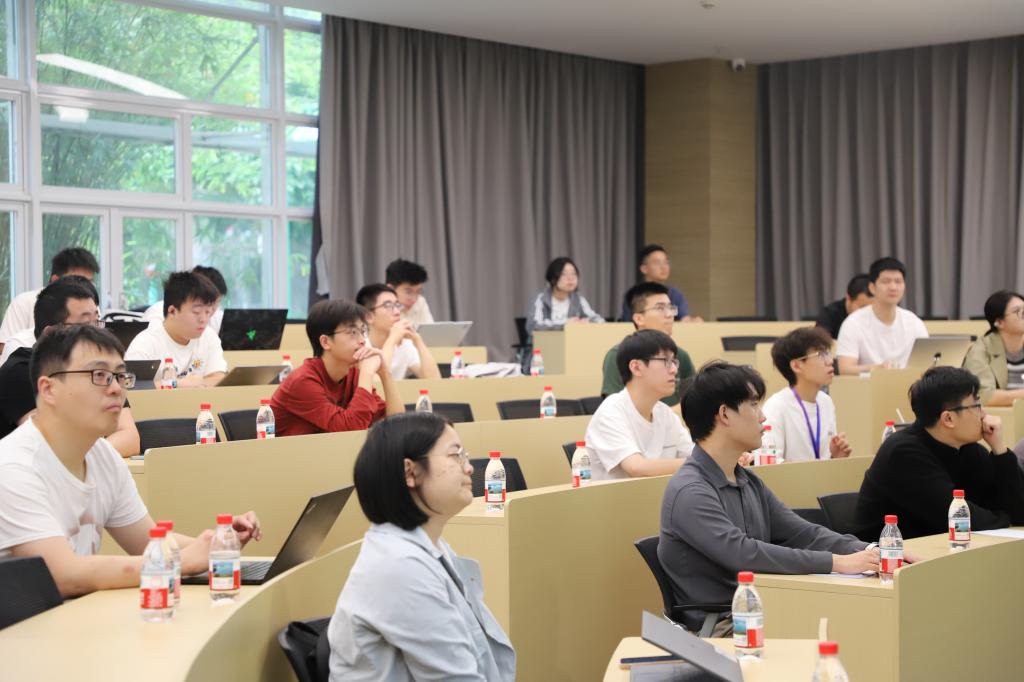
Figure 3. Students and faculty engaged during the lecture
At the end of the talk, Prof. Serre expressed his gratitude by saying “thank you” in several different languages, which was met with warm applause from the audience. During the Q&A session, students actively raised questions and engaged in in-depth discussions with Prof. Serre on topics such as the large-scale production and practical application of MOF materials, as well as the use of machine learning to predict MOF properties. Finally, Prof. Wang presented Prof. Serre with a commemorative plaque from the “Nanyan Lecture Hall.”
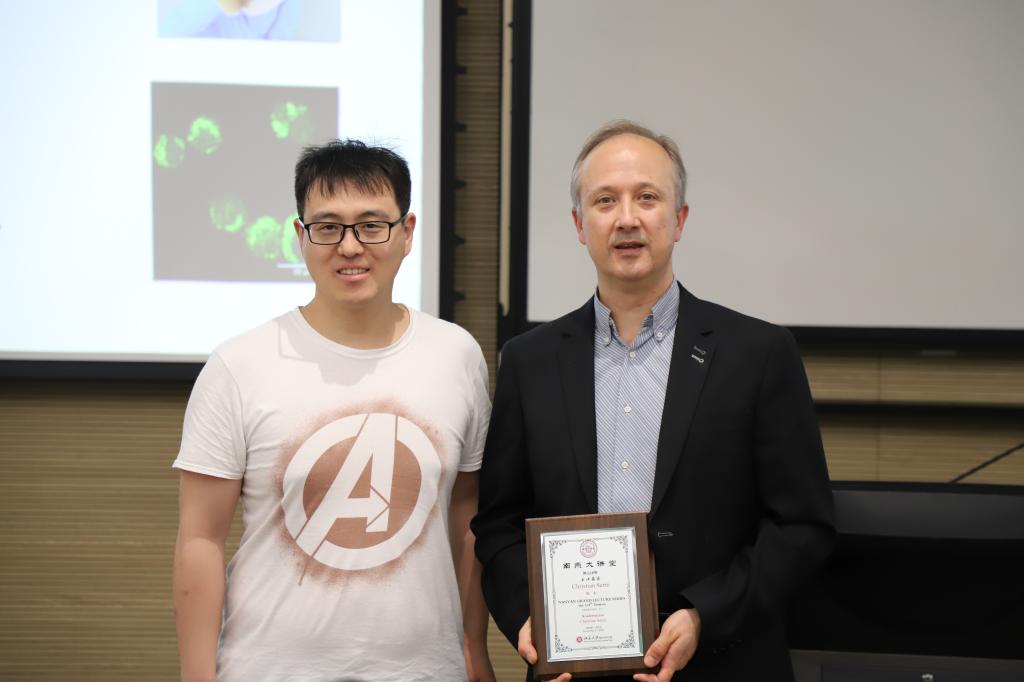
Figure 4. Prof. Wang presents the Nanyan Lecture Hall commemorative plaque to Prof. Serre.