Feng Bin still remembers the moment his research finally clicked.
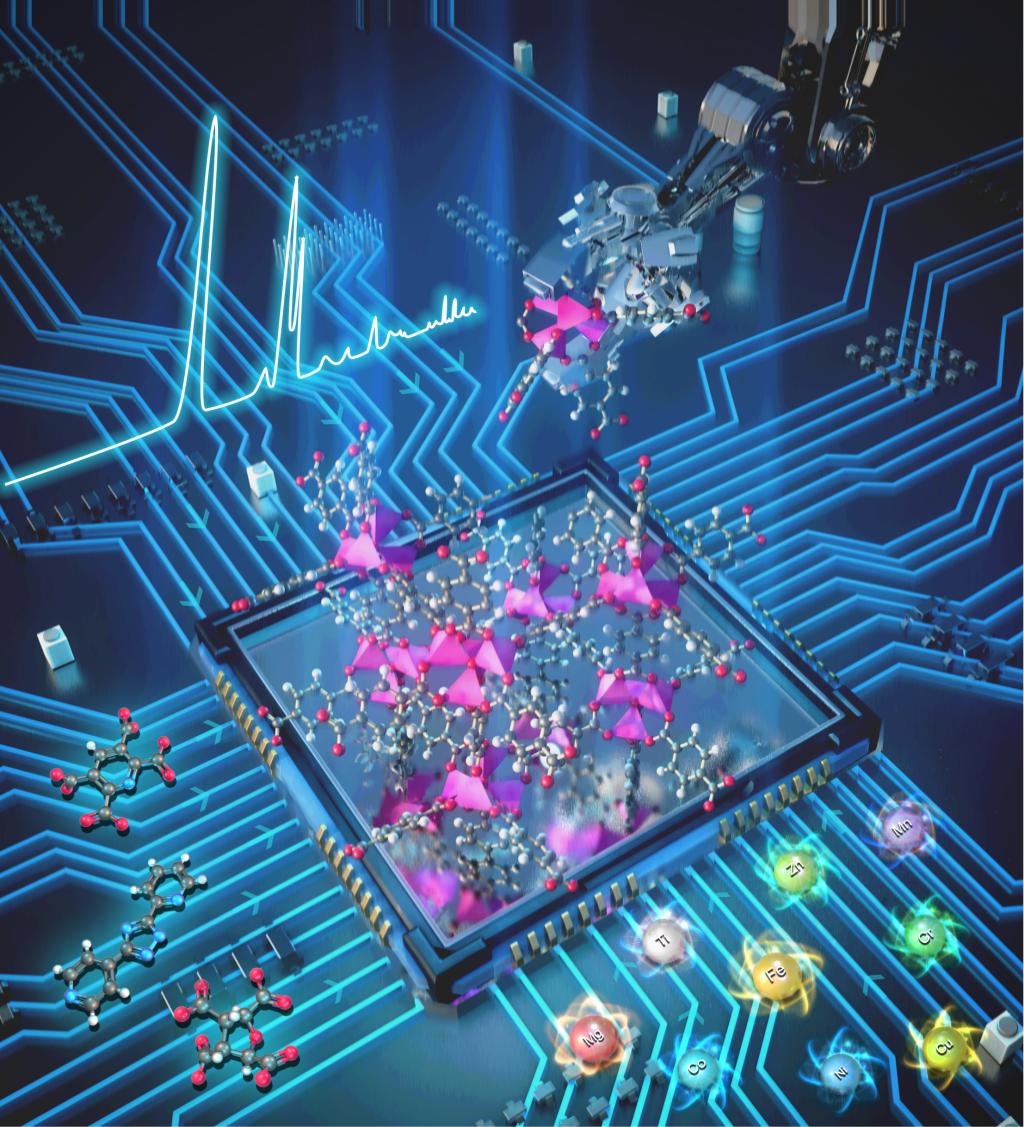
It was late at night in his lab—a cramped two-square-meter desk he had made his own, decorated with small touches from his girlfriend. After months of wrestling with generative AI models and crystallography data, the results finally made sense. His algorithm could decode the complex X-ray diffraction patterns of metal-organic frameworks, filling a critical gap in automated crystal structure analysis. That breakthrough would eventually become a first-author paper in theJournal of the American Chemical Society—a top-tier journal with an impact factor of 15.6.
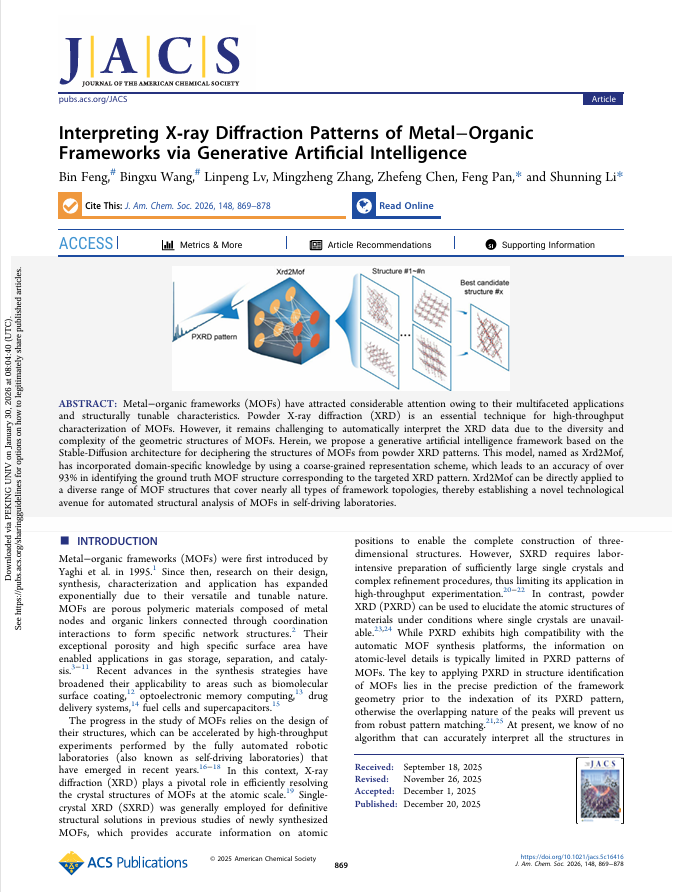
"I wasn't sure it would work until that night," Feng recalls, a quiet smile forming. "Sometimes you throw everything at a problem, and nothing sticks. But that night, it did."
For Feng, a 2023 master's graduate from the School of Advanced Materials at Peking University Shenzhen Graduate School, that moment was years in the making. Advised by Professor Pan Feng, he worked at the intersection of materials genomics and artificial intelligence—a field that marries the rigor of materials science with the transformative potential of machine learning. "It was exactly where I wanted to be," he says. "Materials and AI, connected in a meaningful way."
Yet when he first arrived at the Shenzhen campus, Feng wasn't entirely sure what to expect. He had chosen this program deliberately—Professor Pan's research direction was a perfect fit—but the journey ahead proved far richer than he had imagined. "The campus didn't rush me toward a single goal," he reflects. "It gave me room to explore, like a mother guiding a child—subtle, gentle, and nurturing. Only now, as I'm about to leave, do I truly understand what I gained here: the confidence to explore."
Breaking Down Anxiety into Concrete Steps
Graduate research is rarely a straight line, and Feng's path was no exception. "There were plenty of lows," he admits. "Weeks of work would yield nothing. An idea that seemed brilliant would collapse under scrutiny. I'd ask myself:Is any of this meaningful? Am I on the wrong track? Am I just not good enough?"
His solution was methodical. "I learned to break anxiety into specific, solvable problems. Fix one bug today. Optimize a data pipeline tomorrow. Redraw a figure, rewrite a paragraph, the next day. Most obstacles that seem insurmountable are really just a series of small steps."
That resilience paid off. Beyond his first-authorJACSpaper, Feng contributed to six additional publications, filed a patent as second inventor, and received the "Excellent Young Speaker Award" at an IEEE conference—ranking in the top 10% of participants. His research using topological data analysis to extract structural features appeared in theJournal of Physical Chemistry Letters, and several co-authored papers are currently under review.
"I used to be a student who looked for standard answers," he says. "Now I know how to navigate open-ended questions and find my own path."
More Than a Lab Coat
But Feng is far from a lab-bound recluse. "I'm not a science fanatic," he laughs. "Student work, volunteering, and social practice introduced me to so many different people. Everyone has a unique perspective, and everyone deserves to live their own life."
As deputy secretary of the Youth League Committee at Shenzhen Graduate School and head of the organization department in the School of Advanced Materials' graduate student union, Feng immersed himself in campus life. He organized the "Boyazhicai Forum" and the "AI4S Second Forum," led the "Duxing Plan" social practice program—which earned the Shenzhen "Enterprise Award"—and served as a core editor forThe Ideological and Political Practice of Walking, a published compilation of field research.
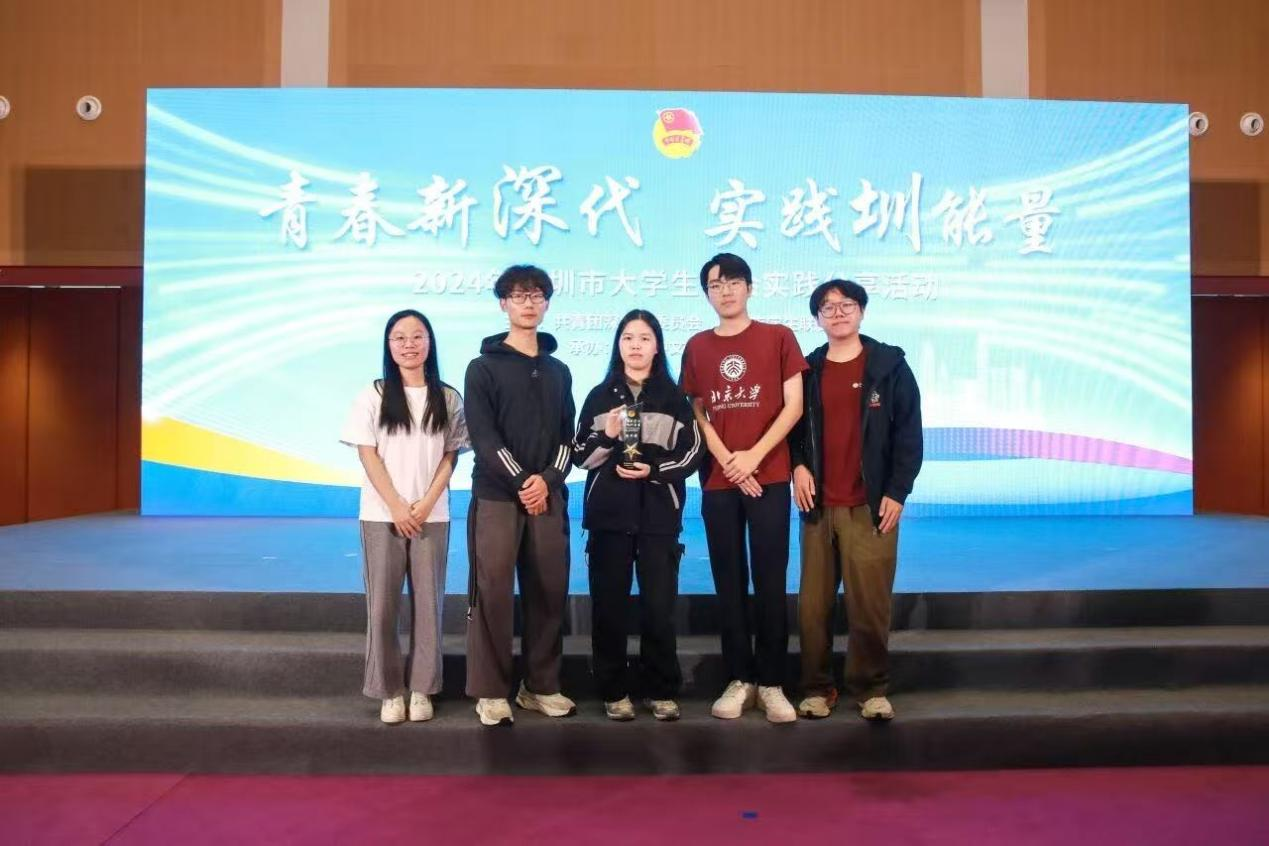
"None of this would have been possible without my advisors, Zuo Teng and Yuan Xiaoling," he says gratefully. "They trusted me with responsibilities before I was fully ready. That trust pushed me to grow. I learned that being a student leader isn't just about getting things done—it's about serving others, building teams, and taking ownership."
Seeing the World Through Service
Feng's commitment to service extends well beyond campus. As head of the graduate school's volunteer department, he organized the "Xingyu" program to support children with autism, running 11 sessions across three special education schools in Shenzhen. The initiative was recognized as a Peking University outstanding volunteer activity.
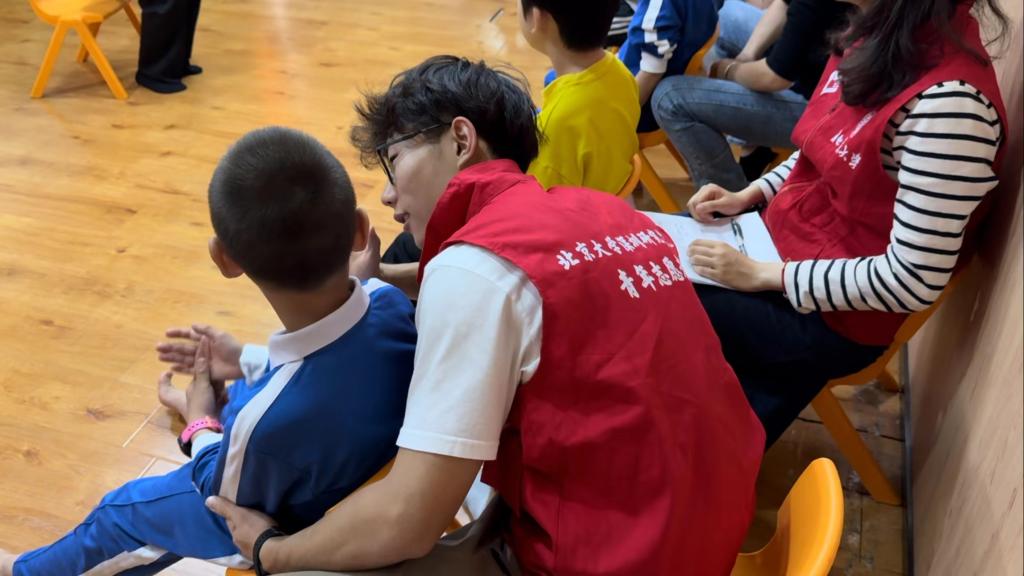
His volunteer portfolio is staggering: campus orientations, the inaugural ceremony for the School of Intelligent Science, community English corners, the X9 Rowing League (covered by national media), and establishing the Shenzhen Red Cross grassroots organization at PKU. He also participated in the "Lixing Plan," conducting interviews with factory workers and submitting a detailed report on labor market conditions.
"Each volunteer experience was a chance to step outside the ivory tower," he says. "I interacted with different communities, understood diverse needs, and learned to see the world through others' eyes." In November 2025, Feng was officially admitted as a member of the Communist Party of China—a milestone he regards with deep pride.
The Courage to Move Forward
Looking back, Feng identifies one gift above all others from his time at Shenzhen Graduate School: courage. "It wasn't handed to me—it was built, piece by piece, through guidance from mentors, support from peers, and countless nights of facing problems alone and starting over."
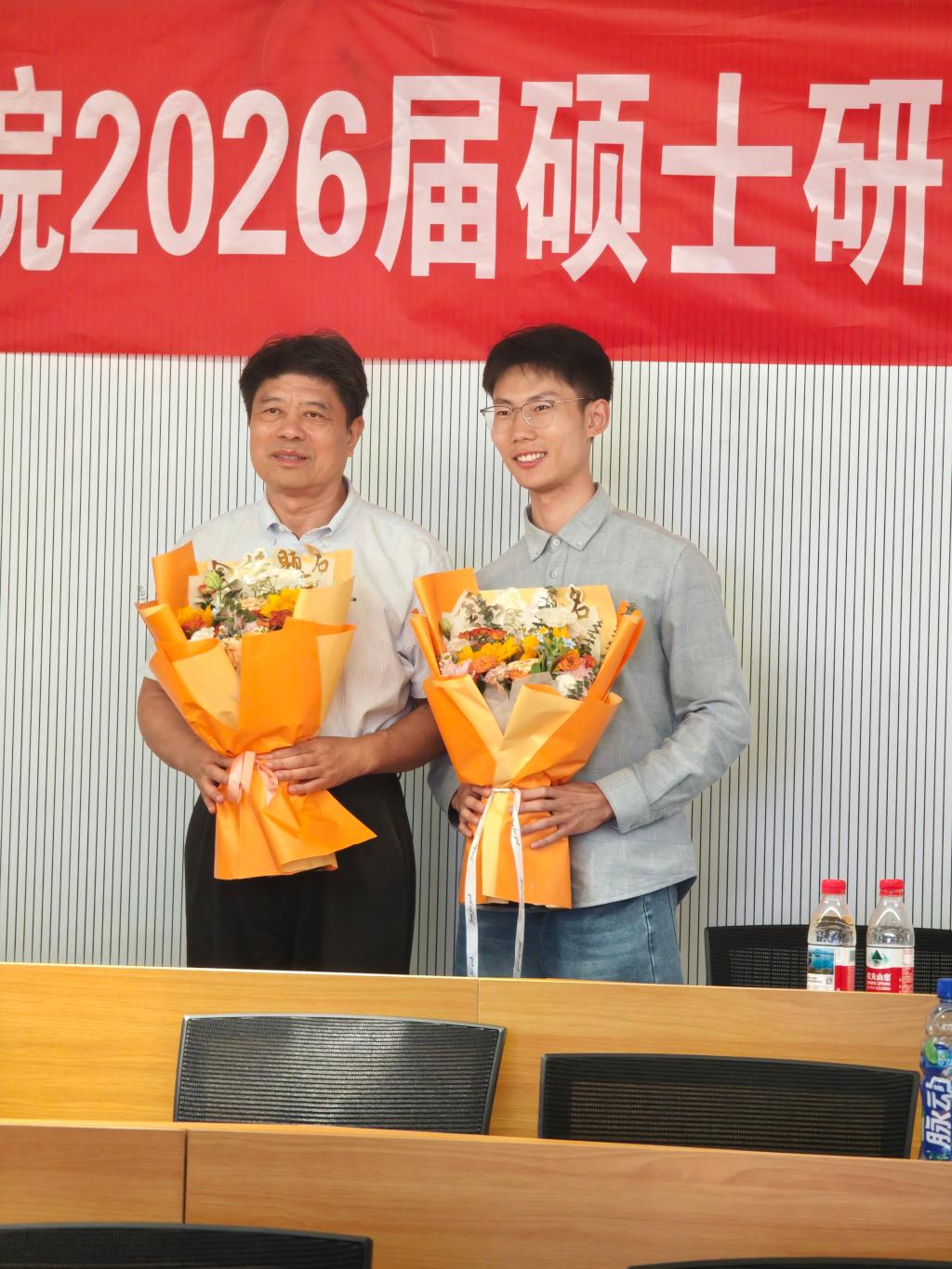
That courage was tested during his final months, as graduation loomed. "The thesis needed finalizing. Ongoing research required wrapping up. And future plans—doctoral applications, direction choices—were all pending. Nothing felt completely ready or certain. But I realized that most important decisions are made with incomplete information. The campus taught me to take that first step anyway. If you fall, you get back up."
He will soon begin his Ph.D. in chemistry at Washington University in St. Louis, supported by the prestigious Fossett Fellowship from the College of Arts and Sciences. "This path is consistent with why I came to Shenzhen in the first place," he says. "Back then, materials genomics and AI for Materials felt promising and exciting. Now, after experiencing the entire research cycle—from idea to method, from data to model, from results to publication—I know why I want to commit my career to this field."
"The problems ahead will only get more complex, with new technologies, new environments, and new cultures," he acknowledges. "But this place taught me that the most important thing isn't having all the answers upfront. It's being willing to learn, try, and take responsibility—even in uncertainty."
The Places That Shaped Him
If he has to name the single place he'll miss most, it's his desk—his humble two-square-meter workspace in the lab. "I spent more time there than in my dorm. That's where I got my model results. That's where I became a Party member. That's where we stayed until 11 p.m. and decided to pull an all-nighter. It's not luxurious, but sitting there, I feel at peace."
The library, too, holds a cherished place. "The Peking University library is like the bass line of a grand symphony—deep, steady, and grounding. From my first uncertain days to now, it has been my silent companion. I borrowed my first professional book there, attended my first academic lecture, and spent countless nights wrestling with research problems. It gave me not just the eyes to seek truth, but the heart to appreciate culture. Wherever I go, its lights will always burn in my memory."
Words for the Next Traveler
As he packs his bags—literally and metaphorically—Feng leaves behind a message for those who will follow.
"ReadMao: A Biographyby Edgar Snow, and theThree Hundred Tang Poems," he recommends. "The first shows how one person navigated a grand historical narrative; the second is a treasure of Chinese culture. Those ancient verses will give you comfort and strength at different moments in life."
"Stay passionate, but stay grounded. You'll face forks in the road, confusion, comparisons, anxiety, and failure. You'll question your choices. But remember: every attempt is meaningful in itself. Don't focus only on where you'll end up—cherish how you become the person who gets there."
"Be practical. Be determined. And move forward."
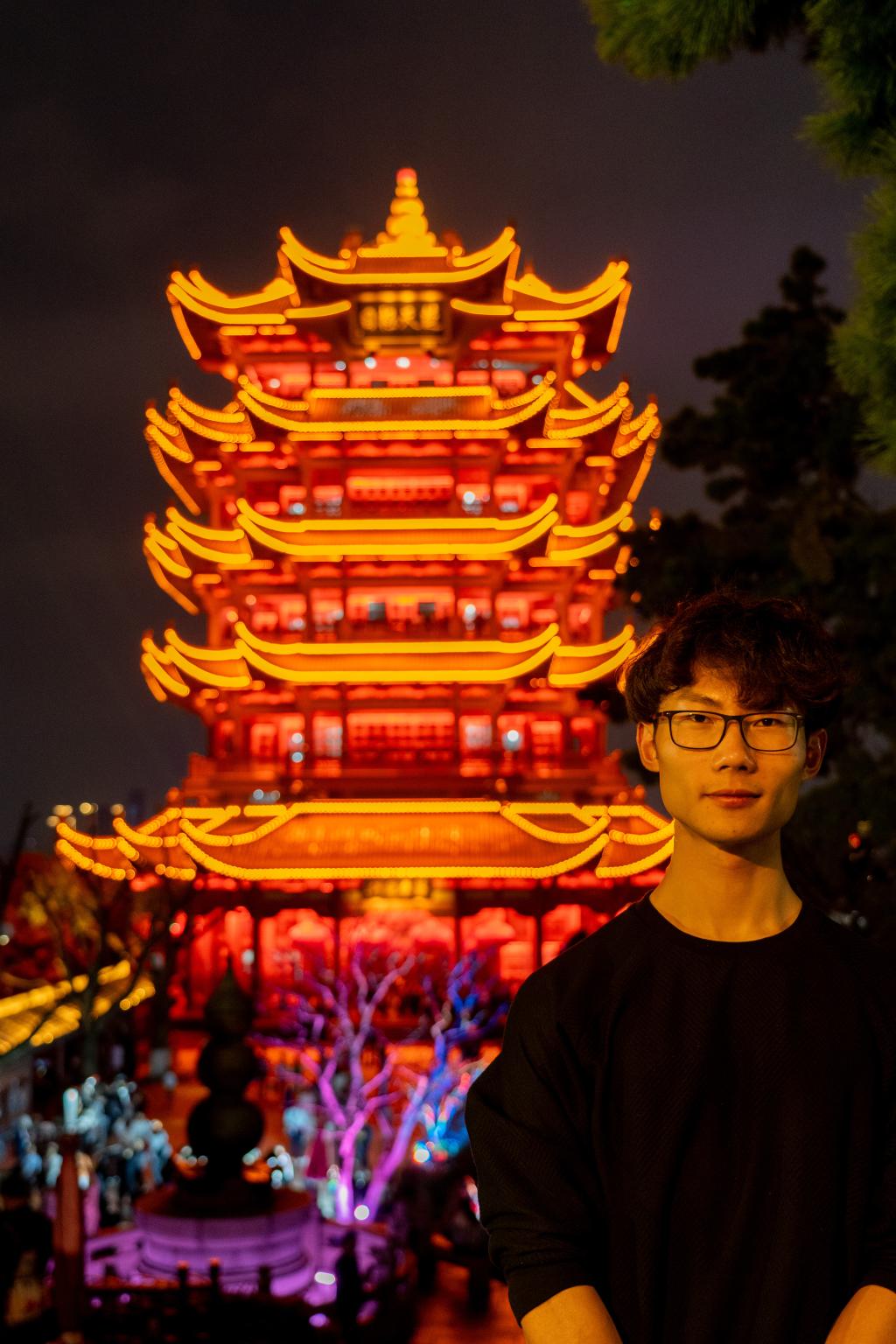
"Every departure is also an arrival,"Feng says softly. "Leaving NanYan—the Shenzhen campus—doesn't mean leaving behind what I've gained. It means carrying those gifts into the next chapter. We think leaving means losing familiar places, faces, and rhythms. But what truly matters has already become part of us—how we see the world, how we face challenges, and how we choose our way forward."