Two leading materials scientists from Hong Kong and Guangdong Province delivered invited talks at Peking University Shenzhen Graduate School (PKUSZ) on April 3, addressing critical challenges in catalytic chemistry and nuclear waste treatment.
The lectures were chaired by Professor Zou Ruqiang, Dean of the School of Materials Science and Engineering at Peking University and Dean of the School of Advanced Materials at PKUSZ.
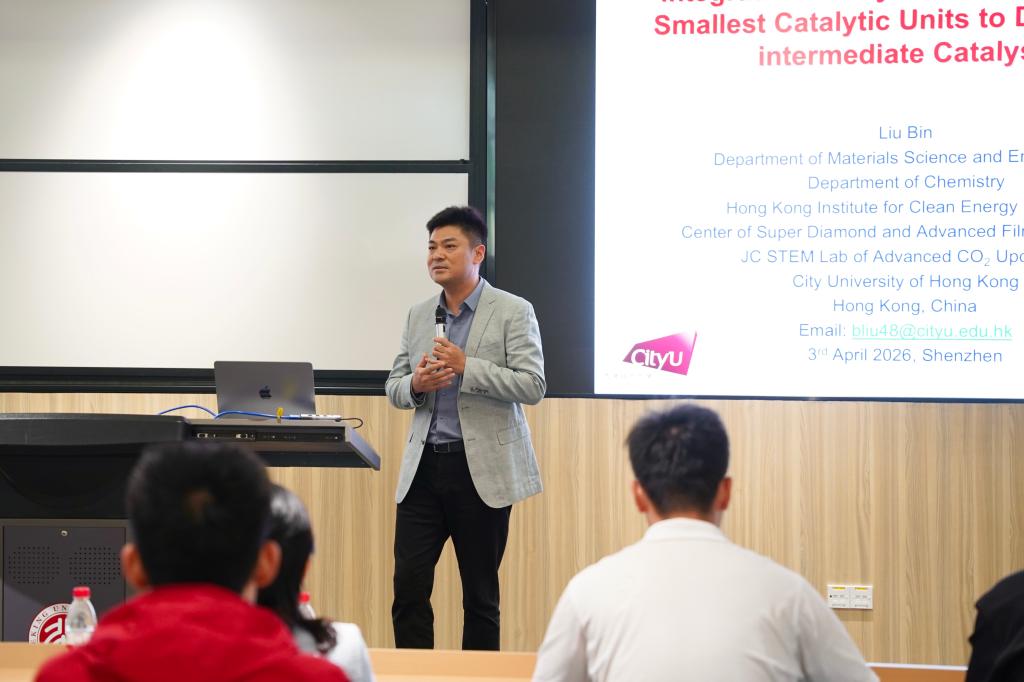
Integrative Catalytic Pairs – the Smallest Catalytic Units to Drive Complex Chemical Reactions
Professor Liu Bin, Global STEM Professor in the Department of Materials Science and Engineering at City University of Hong Kong, introduced a new class of catalysts termed Integrative Catalytic Pairs (ICPs). Moving beyond conventional single-atom catalysts, ICPs feature two adjacent active centers that mutually tune their electronic structures, creating a synergistic effect. Professor Liu described these pairs as “the smallest catalytic units” capable of driving multi-step chemical reactions. He also shared how his team is applying biomimetic strategies to bridge the gap between laboratory innovation and industrial-scale catalyst production.
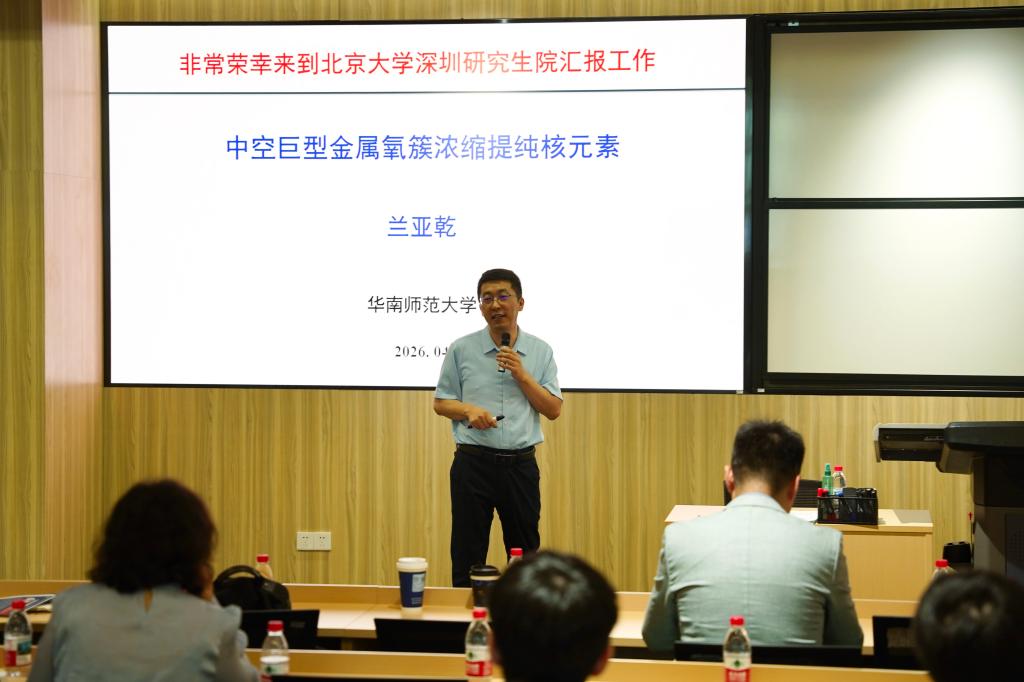
Hollow Molecular Cages for Nuclear Element Purification
Professor Lan Yaqian, Dean of the School of Chemistry at South China Normal University, presented a solution to one of China’s strategic challenges in nuclear energy: the separation and purification of transuranic elements from spent fuel. Given the country’s limited uranium resources, such technologies are crucial. Professor Lan’s team has developed hollow, open-cage giant polyoxometalates with precisely engineered cavities and coordination sites. These structures act as molecular sieves, enabling the confined crystallization and efficient concentration of radioactive nuclides.
Following the presentations, faculty and graduate students engaged in a lively Q&A session, exploring potential collaborations and future directions in energy materials research.